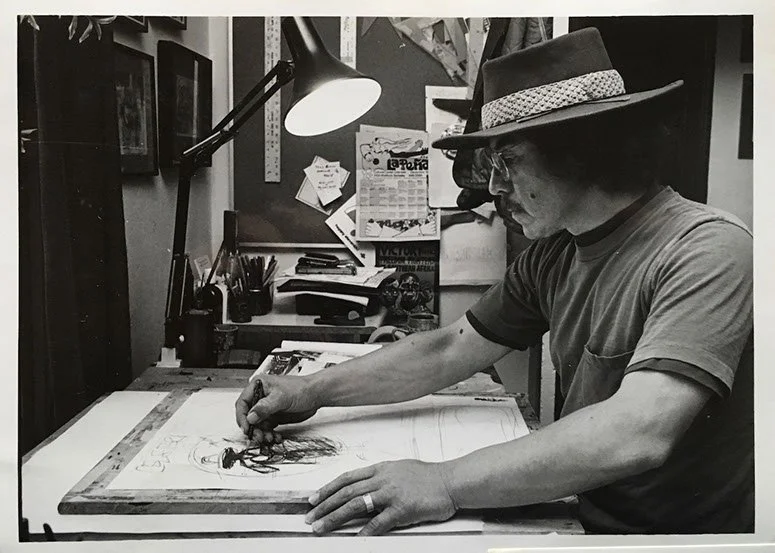
CHICANO ARTIST + EDUCATOR
MALAQUIAS MONTOYA
BORN 1938, ALBUQUERQUE, NEW MEXICO
A pioneer of the Chicano poster and one of the few living founders of the social serigraphy movement born out of el Movimiento. For more than six decades, his art has served as a voice for the voiceless.
BORN INTO THE VOICELESS MAJORITY
Malaquias was raised in a farmworker family, one of seven children, following the harvest between New Mexico and California's San Joaquin Valley. After his parents separated, his mother, Lucía continued working in the fields so her children could get an education. Over time, he came to understand that the communities he grew up in were not voiceless by choice, but silenced by a conscious effort on the part of those in power. His art became his “voz”, his protest, and a way to give those communities back their voice.
snapshots trás el tiempo
born in albuquerque, new mexico.
1938
Born in rural Albuquerque, New Mexico. At a young age, Malaquias along with his mother and siblings, move to the agricultural Central Valley of California.
marines + commercial silkscreen
1960’s
Serves in the U.S. Marines, then works in a commercial print shop in San Jose, where he learns silkscreen.
UC Berkeley + Founding of malaf
1968-69
Attends UC Berkeley on the GI Bill during the fight for ethnic studies, helps form the Mexican American Liberation Art Front, and graduates in 1969.
enters higher education and develops silkscreen and community mural courses
70’s-80’s
Teaches across the Bay Area, including UC Berkeley and California College of Arts and Crafts in Oakland, while his posters become part of the visual language of el Movimiento.
Joins UC Davis, creating courses in Chicana/o art, muralism, and printmaking, and later co-founds Taller Arte del Nuevo Amanecer (TANA) in Woodland.
courses in chicano art history, silkscreen + community murals for generations of young raza
1989
professor emeritus + Ongoing exhibitions
hoy
Professor Emeritus of UC Davis. At 88, still making work and mentoring new generations of printmakers.
the aesthetics of the message
Montoya is credited with moving the Chicano poster beyond propaganda and into the realm of art. Yet he has said that all art is propaganda: it only depends on who you choose to speak for. Art historian Terezita Romo calls his approach “the aesthetics of the message.” In his prints, composition, form, and technique carry as much weight as the message itself. Activism and art stand shoulder to shoulder.
SELECTED WORKS
-
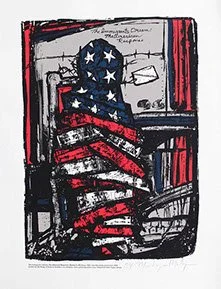
![Original Sikscreen art by chicano artist Malaquias Montoya.]()
THE IMMIGRANTS DREAM: THE AMERICAN RESPONSE
Silkscreen, 1983, 17”x23” (original)
-
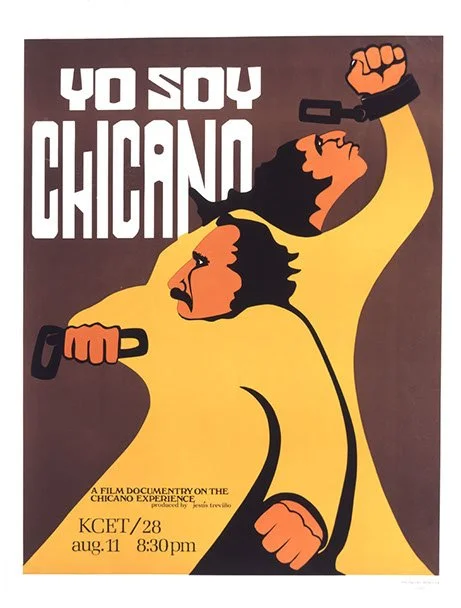
!["Yo Soy Chicano,”Original Lithograph art by chicano artist Malaquias Montoya.]()
YO SOY CHICANO
Offset Lithography, 1972, 24”x18”
-
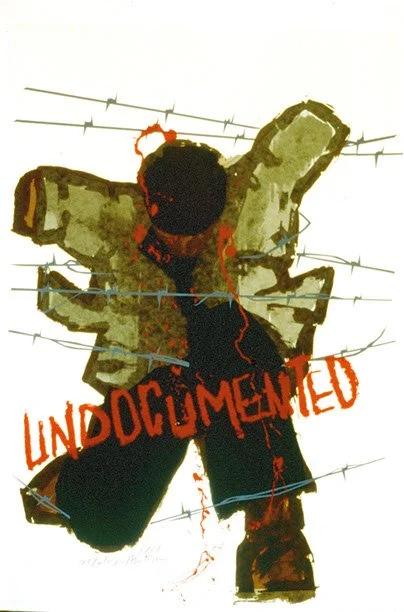
![Original Sikscreen art by chicano artist Malaquias Montoya.]()
UNDOCUMENTED
Silkscreen, 1981, 32”x24”
-
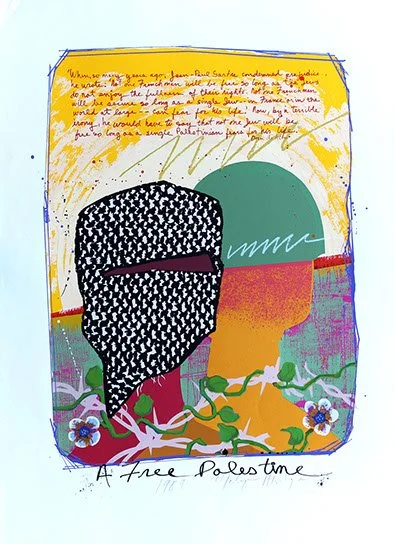
![Original Sikscreen art by chicano artist Malaquias Montoya.]()
A FREE PALESTINE
Silkscreen, 1989, 30”x22”
-
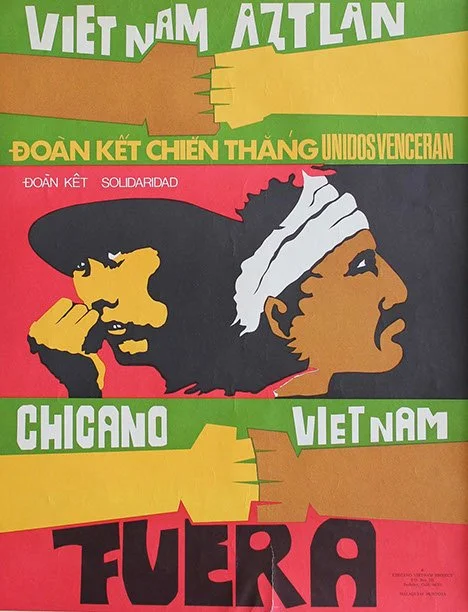
![Chicano-Vietnam solidarity poster lithograph. Original Sikscreen art by chicano artist Malaquias Montoya.]()
VIETNAM/AZTLÁN
Offset Lithography, 1973, 26”x19”
-
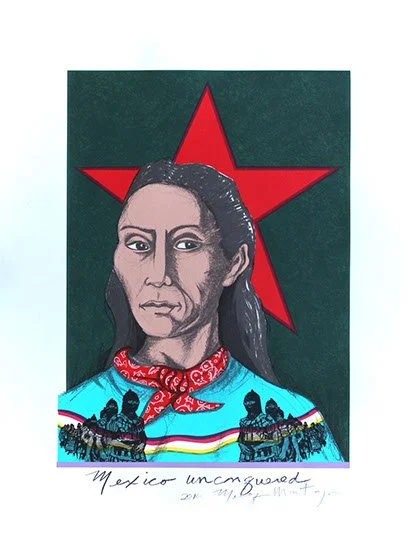
![Original Sikscreen art by chicano artist Malaquias Montoya.]()
Mexico Unconquered
Silkscren, 2010, 26”x20”
-
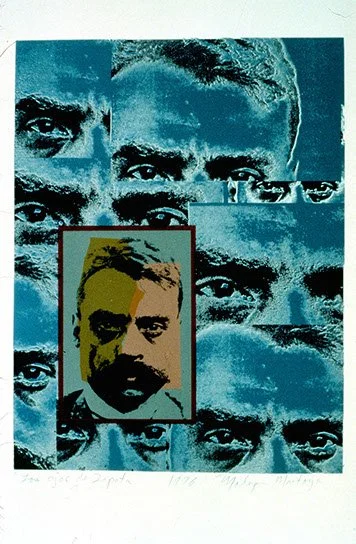
![Original Sikscreen art by chicano artist Malaquias Montoya. Title Ojos de Zapata.]()
OJOS DE ZAPATA
Silkscreen, 1996, 30”x22”
-
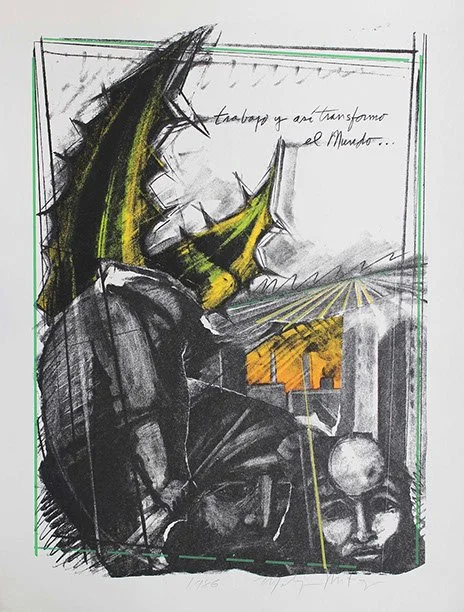
![Original Sikscreen art by chicano artist Malaquias Montoya.]()
Trabajo y así transformo el mundo
Silkscreen, 1986, 26.5”x20”